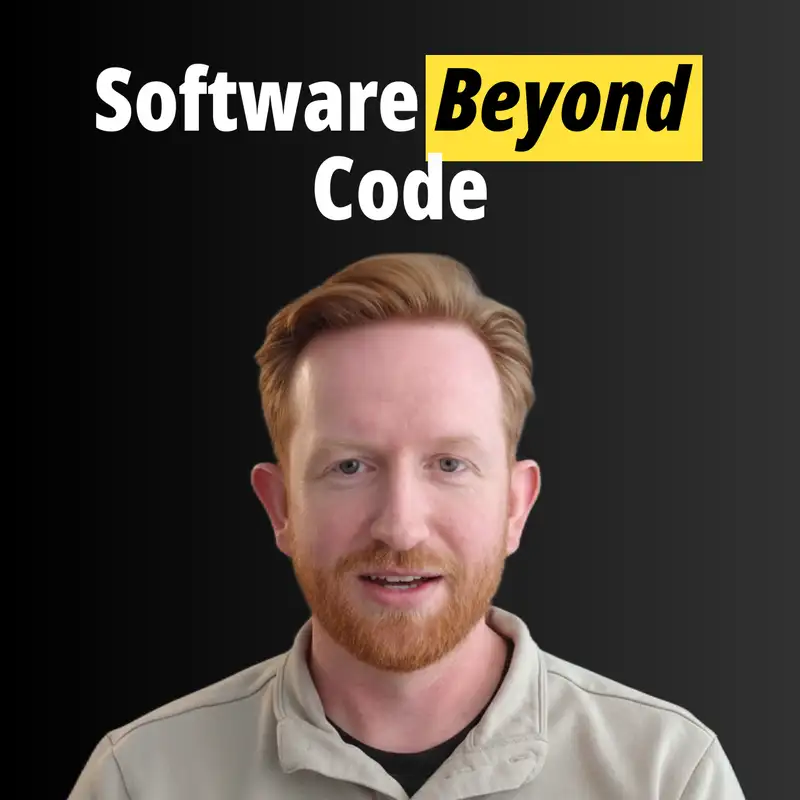
Brian Adams • Seven Hills Technology
Jim Haviland (00:00)
right. Welcome, everybody. This is Jim Havlin and we are working through our list of Ohio X
next 25 recipients recognition offered.
late in 2025. I'm here today with Brian Adams of Seven Hills Technology. Brian, thanks for joining us today.
Brian Adams (00:18)
Yeah, thanks so much for having me. I'm really excited.
Jim Haviland (00:20)
I always love meeting folks that kind of get these recognitions. So that's what we're going to talk about today. But let's begin with just going over your stories. And when you say the two or three minute version of your story, what do you typically say?
Brian Adams (00:35)
Yeah, you know, growing up, I had a couple of interests as I was looking at like, what do I want to do for a career? And one was doing stuff with cars becoming a mechanic and the other was going into technology. And so I chose technology. Was that, yeah, that's my amateur job now. That's my weekend work. ⁓ So I decided to go into technology and honestly, I sort of was terrible at it.
Jim Haviland (00:47)
It's not too late by the way, you could still do cars. They're still around. Yeah. Okay, good. Okay.
Brian Adams (01:01)
I learned like IT help desk stuff and didn't really get it. It didn't click and then I hit software and programming and it just like had that light bulb moment, right? ⁓ And started freelancing in high school, went to college studying computer science, joined a consulting company there where I met my now business partner. He's the guy that hired me and through some series of events, I sort of ended up here about eight years ago.
Jim Haviland (01:12)
Yeah.
Well, fantastic. I mean, this is a space that's changed a lot. what was he, when you first started, seven Hills, what was, what was the thought, what was the vision for that?
Brian Adams (01:31)
Yeah.
Yeah, so it's sort of interesting. Normally when a company starts, there is some sort of grand vision, right? ⁓ Brad, our... ⁓
Jim Haviland (01:44)
Well, not always. mean, what
we actually find is that for most businesses start with someone who's a subject matter expert that just wants to kind of build a job around it.
Brian Adams (01:53)
Yeah,
yeah, exactly. so, you know, coming from the software consulting space, like I said, our original founder, he hired me at the last consulting company that we were at. And dude just knows like everything there is about software and technology. I mean, his breadth of knowledge is insane. we've always sort of held this belief amongst each other that software engineering is not just about the technical bits. There's all these other factors that go into
building great software, everything from the UX UI and who the users are and how they're using it and what that actual downstream impact is. Does it make sense to make or should you just buy something? And we really believed in that. And that's sort of what we've centered the idea of the company around, which is like, yes, we have to know technical stuff. We have to be experts there.
But at the same time, you also need to understand the business side, especially business finance side and the UX side and product management. You gotta be comfortable talking to users. You gotta be comfortable sort of getting kicked around a little bit. If you're doing something that's not right. And we've really taken that approach and that's sort of been the guiding philosophy over the years.
Jim Haviland (03:03)
You know, it's interesting how, you know, in all industries, there's always that, that, that, that arc that changed from when it's first introduced, when it's a very technical field to like, now we have to find places where it fits. Like we don't have, you know, chief electricity officers inside businesses. Right. So we, kind of figured that stuff out, but certainly in a much faster way, the way, you know, companies consume technology has changed dramatically. ⁓ And I imagine at this point,
Brian Adams (03:18)
Yeah, yeah.
That's it.
Jim Haviland (03:31)
The way you get work done is probably dramatically different from the way you got work done originally.
Brian Adams (03:37)
is
somebody would tell me four years ago the way we'd be building software today out of the neighborhood absolutely crazy there's no chance right and so it's it's really it's it's night and day different and
⁓ you know, it's one of those things I tell you, we've focused on the business impact and all these things that go alongside with the technical side. And that's really turned into sort of an advantage for us lately. We look at what AI has done to software development and you have a lot of very, very smart, technical people. I'm a good programmer. I would not say I'm like the best of the best, right? I know enough to be really effective, but there's much, much smarter developers than me. But what we're starting to see now.
Jim Haviland (03:59)
Mm.
Brian Adams (04:17)
with AI and how much these agentic tools are writing code, software developer roles, software engineering roles are shifting. And guess what's becoming more important? All these things around the outside of it that we've been focusing on. And so we've been able to adapt to that change really, really well. Now, obviously everybody's still learning the best way to use the tools and what's most effective for them and their organizations. And we're constantly doing experiments and iterating on that side of things too, but
Jim Haviland (04:21)
Yeah.
Right. Yep.
Brian Adams (04:45)
the core of what we talk about of product management and business thinking and UX UI, that stuff has now been like, now software engineers are expected to learn that we're already ahead of the curve there and that's become really interesting.
Jim Haviland (04:59)
Yeah, that is very interesting. I think it's, yeah, I mean, you're much more aligned with what the need is now. You know, as I go take all of our clients through this journey of trying to figure out where, how they're going to approach AI, you know, one of the ways I break down work and the kind of people that you want to, you want to partner with, there's, there's good builders that initiate and there's good people that run stuff, right? The build run, then the
Brian Adams (05:23)
Yeah. Yep.
Jim Haviland (05:27)
Um, uh, review and revise, you know, like, like, Hey, we've got to continually improve this. And, I, I'm mostly counseling my clients at this point to not be on the build side because there's not much upside to learning how to build right now. Cause it's going to be better, different, easier later, you know,
Brian Adams (05:43)
It's going to change.
mean, that's the thing, right? And everybody in this space, anybody that tells you they know exactly where this is going, they're full of it, in my opinion. ⁓ We're all placing bets on different things. And there's a big fact of software engineers that say, no, this is about as good as it's going to get, and we still got to worry about these things. And there's other parts that are like, in five years, we're not going to care what the code is. We're not even going to review it. It's just going to build and ship itself.
Jim Haviland (05:52)
Correct.
Brian Adams (06:08)
So we're trying to find that balance and figure out the appropriate sort of thing there. But that's why knowing, like you said, that sort of that build and then run phase and that ongoing improvement. If you don't understand the foundation of why you're building something or what you're building, don't understand the business impact and the users that it's affecting and how they use the system. Guess what? You could build the best software in the world, but it may not actually solve their problem.
Jim Haviland (06:25)
Mmm.
Yeah.
Brian Adams (06:34)
Similarly, you can improve it a lot, if it's that far off, like you're sort of you're toast. So you got to be able to see it end to end. And that's been our whole philosophy.
Jim Haviland (06:38)
You
Brian, you used to use one of my favorite words, why. Well, there's two things that when something is going wrong inside a business that I give away this to free all the time. It's like, listen, everything you should be doing it for the why, not because you're doing the performative dance. If you don't know the why, then you're not going to make a good decision. The other one is when something goes wrong, who owns it is the question you should ask yourself.
Brian Adams (06:45)
Yeah.
Yeah.
Well,
and that's the part where, like, again, I said, there's this divide, right, of how much do we care about the code? It is like somebody's got to be held accountable for it at the end of the day, right? Somebody prompted it, somebody chose not to review it, and then somebody shipped it and caused the data leak. Like, yeah, you still got to be responsible for what you're shipping.
Jim Haviland (07:13)
Indeed.
Well, it's one of things I've been helping my clients, you know, put their AI they're using actually on the accountability chart on the org chart. It's like. Yeah, yeah, so so just so that you're you know, this should report to you. It is you're giving it responsibility for some things. should be have some KPIs to be measured by. You should be really clear about what it's like, what your expectations are, because it's just like every employee. It's only going to do as well as you give it clear direction.
Brian Adams (07:30)
that's an interesting idea, yeah.
Yeah.
Yeah, there's a lot of thinking of managing the different agentic AI and the different AI tools is just like managing different people, right? They're just far more obedient than what human people naturally are. Exactly, yes, that's exactly right.
Jim Haviland (07:58)
And they're going to be obedient to a fault, right? They're going to do exactly what you said, For at least for the time being until they take
over. that aside, so you were recognized by Ohio X. What do you, how do you attribute the, recognition?
Brian Adams (08:14)
we're big on building in Ohio and building in the area. Something that I routinely think about is like our local communities are sort of the last place that we have a big impact. The world's so different now than what it used to be, right? And we can actually have an impact on local communities. And that's why
Jim Haviland (08:31)
Mm.
Brian Adams (08:32)
you know, conventional software agencies over the years have shipped work overseas to maximize margin or, you know, gone global with their workforce. And there's nothing wrong with that effect. We've done it too, and we still do it on occasion for different needs, but primarily, like, we're focused on building something here that can give back to our community, can contribute positively to the Ohio economy.
and really trying to be stewards to say like, hey, this is a important skill set, this type of technology skill set. This is important. We should want to keep this in Ohio. We should want to keep this in the United States and really trying to lean into how can we create a desirable place to live and work within Ohio instead of seeing talent in this space go elsewhere.
Jim Haviland (09:02)
Mm.
You know, it's so hard, think, you because I work with entrepreneurs, you know, in various stages of their growth, right from, you know, here's, here's three people, here's 400 people. And I need everyone one of those stages, you still have the pressure to do the immediate economics of the situation. When in reality, you part of the, you earn the right and the responsibility, I think, as you grow.
Brian Adams (09:25)
Mm-hmm.
Jim Haviland (09:43)
to have that longer and longer term view of what's going on. What's the impact of this going to be long-term? And that is what we see a great companies do is, you have to, when you're in survival mode, you've got to stay in survival mode, right? Like how are we going to get to payroll? But as you start making a profit and then try to get to real target market fit, it's really, expectation of the leader should be, I'm thinking further and further out.
Brian Adams (09:48)
Exactly, yeah.
Yeah, yeah, exactly.
Right.
Jim Haviland (10:12)
You know, the, the story I tell all the time is about Jeff Bezos. When he first started out, if books were behind schedule, he would go down and help put books in in, in, boxes. Right. That was, know, in the early days, but by the time he was done multiple interviews, said, my job is to think about the impact of this business, make three, three great decisions that will impact this business 20 years from now. Right. And that's the arc. You know, that's like, like, that's the arc of the story. I mean, going from.
Brian Adams (10:16)
Mm-hmm.
Yeah.
I like that approach and yeah.
Jim Haviland (10:38)
I've got to steer this thing through the storm to the point where I got to be thinking about what happens, not even next season, but next generation.
Brian Adams (10:46)
Yeah,
yeah, absolutely. And you know, the other part of it too is like, to me, it's fun to be able to walk around our office and go talk to people and have those small collisions, those small engagements that remind us we're all human and we're all sort of going through this together, that you just lose that in that remote sense. And so while we've got team members throughout the United States, when I look at like, what can we do in Ohio? I look at how can we build that place where people want to come?
Jim Haviland (11:11)
Well, so tell me about the future. So you didn't start with a vision. That's not uncommon. But at this point, you've got a bigger responsibility. You've got people reporting to you. You've got families that are relying on the thing. I know I've talked to plenty of people that there's some kind of unlock that goes, OK, now I've actually got to grow this to the point where it actually can withstand the changes that coming. It can actually thrive. How do you think about the future?
Brian Adams (11:16)
Yeah.
Yeah, absolutely. Yep. Yeah.
Yeah, that is a massive, massive challenge right now. And it's so hard to look out, call it 10 years and even see what the landscape is going to look like because three years ago, it totally different than it does now. And the economics of our business has changed in the last 18 months, like in a very substantial way, like a massively substantial way. I'm not...
Jim Haviland (11:57)
Absolutely.
Brian Adams (11:59)
You know, I don't like to think about what it's going to look like in 10 years because to be quite honest, I don't know. I look a little shorter term, three to five years normally. And what I see is again, I think the act of developing software will continue to get commoditized. That piece I think is going to continue to shrink in terms of the value that it comes from it.
So then when I look at how do we build a sustainable business with that commoditization of the core value that we provide now, it's like, okay, well now we've got to go find other ways that we can provide value. And so this year is running a lot of different experiments. We're looking into a lot of different markets, both vertical and horizontal, different challenges that we enjoy solving that maybe, hey, maybe it's solving this problem a whole lot. Trying to sort of figure out what exactly that is where we can take
the lessons that we learn about building systems, building end to end value, how do you then incorporate that in a way that isn't solely based around software development where that's one component of it, but it's all these other technology components sort of working together to provide additional value on top of that, because I think that's where the real value from an agency like mine will be in three to five years.
Jim Haviland (13:14)
Yeah. And I see so much of what people are struggling with now isn't having the AI, being able to, know, everyone's got data, but it isn't necessarily actionable data and integrating all of the sources of knowledge and wisdom seems like it's.
Brian Adams (13:31)
We're doing a ton of like AI readiness assessments right now because of exactly that. Everybody's getting board pressure, right? Oh, we got to have AI. We're falling behind our competitor. They did this new AI tool, whatever, right? And what we're finding is like most organizations have a ton of data, but it is not AI ready. And a lot of the times it's not even close. Like, yeah, we've got data going back to 1994. Great. Where is it? Well, it's in these PDFs in this filing care, you know, in these paper documents in a filing cabinet, or it's in PBS or
Jim Haviland (13:58)
Yeah, yeah.
Brian Adams (13:59)
It's in 12 different systems and none of it correlates. Like that's the challenges that we're seeing companies having to work through right now to actually implement AI into their product or doing something proprietary that really moves them forward.
Jim Haviland (14:13)
Brilliant. So, ⁓ so let's move to you as a, as a leader. so when you think about, you know, when you started this business, ⁓ and you were, you were young and nine, perhaps naive as most of us are when we start businesses. Yeah. Appreciate that. Yeah. Humility is an important leadership skill. what would you tell yourself? What have you learned along the path that you could kind of as an offer, as a nugget back to someone in your shoes right now.
Brian Adams (14:24)
Very much so, still am.
Yeah, it's a great question. mean, one of the things that we've always done and still do, and I think it's been worth it every dollar it's cost us, to be honest, which is doing the right thing instead of chasing the money. ⁓
Jim Haviland (14:51)
There you go.
Brian Adams (14:51)
And we've done it again. I'm not saying I would go back and change and do it differently because we've been doing it. But I think that's one of the single most important things that we do. Our sales team hates it when I go on sales calls because I'll sit there and say, yeah, you shouldn't build this software. You're not ready. You should go do these other things first. And then we'll talk and we'll help you understand how to do those things before you actually do this. ⁓
Jim Haviland (15:13)
love that Brian,
it's such an, you know, what I teach my clients about is that one, you're going to have to live with the consequences of your actions. so if you take that short term view, you're going to, you you can be cunning in the moment, but then you're going to, it's going to be painful later on. And the way we break it down, that people enjoy, just had, had another video that was clipped out because the people like it so much. It's like, I learned it from somebody else.
Brian Adams (15:21)
Mm-hmm.
Yeah.
Jim Haviland (15:36)
Uh, you know, long ago, I can't take credit for this, but there's everyone knows to say yes to the hell yes things and no to the hell no things, but, between hell no and hell yes, it's just hell. Right. Right. So if it's not hell, yes, it's just no, you know, and that's just, and so, and our job then is to be clearer and clearer with what hell yes is. Right. You know, so the, you know, the sales team deserves us figuring out for them. These are the things that we're really going to be able to crush, man. We're going to.
Brian Adams (15:41)
Yeah.
I like that, yeah. I like that.
Exactly.
Mm-hmm.
Jim Haviland (16:04)
They're going to love us. We're going to love them. We're going to do great work for them. It's going to go great. It's not going to be painful. We're going to be chasing the money. If we do this, we stay in this zone where we can really crush it. That's how it's going to go down and we're going to be happy.
Brian Adams (16:10)
Yeah, yeah, exactly, exactly.
When I say they made
it, honestly, I joke with them all the time because it's one of their favorite things because it shows like just who we are, right? That's the best way to get across who we are is exactly that. And, you know, I look at things like I would change. I'm a hard on the sleeve kind of guy and I'm a pretty open book to be honest. And I've realized as we've gotten larger and we've been larger than we are now and...
Jim Haviland (16:27)
That's so great.
Brian Adams (16:42)
As a leader, that has to change. And even if that's my true personality, you got to curb that a little bit. And so that's been probably the biggest lesson. And if I wanted to change something about who I was eight years ago and I joined, ⁓ that would be the number one thing I would focus on is just how to be that more steadying presence.
Jim Haviland (17:01)
Well, I'll give you a nugget from the future then around the online clients. So the reality of it is we have a model for how we think about growing companies. And one of the things as leaders we have to do is realize that our job goes from doing work to communicating work and coordinating work. Right. And part of that is getting becoming a better and better communicator. So just taking ownership of like you do with like we're not going to do work. We don't we can't do well.
Brian Adams (17:05)
Yeah, yeah, I love it.
Jim Haviland (17:27)
taking ownership of what the impact of your words are going to be, right? And being self-aware enough that not that you're not being an open book, but there's an appropriate level of openness that helps, that solves the problem, that makes things better for everybody. It creates trust, because high trust organizations are far more effective and resilient than low trust organizations. that, being authentic, authentic leadership is really powerful.
Brian Adams (17:36)
Yes, that's exactly right.
Yeah, right. And that's the hard part is you got to find that right balance. You got to find that right line. And that's what I've spent. I would say the last four years, that's been my primary focus is how do I find that right line? And I'm certainly not perfect. I'm a very flawed human as we all are, but I'm trying to get better every day.
Jim Haviland (17:53)
And that's the work. That's just the work.
that's brilliant. That's the right work,
All right, Brian, we'd like to give everyone that's on the show an opportunity to call out mentors that have really been an instrumental part of helping you get to where you are. You've been recognized, so this is a good time to look back. And do you have any mentors in mind that you want to shout out?
Brian Adams (18:18)
I mean, absolutely. ⁓ First, before mentors, I rarely get the platform to shout out some of these people. So I have to take advantage of it while I can. And in some ways it is mentorship, but my wife, Carly, she listens to more insanity of me than anybody else could ever deal with.
Jim Haviland (18:28)
yeah, absolutely, please.
Brian Adams (18:39)
but also provides really good insights on how to do things. My family, my mom, dad, and brother for just believing in me, especially my dad, and that's where more getting into the mentor side. My dad runs his own business. It's been a huge inspiration to see what he's been able to build over the last, like, gosh, 14 years now.
And that's been an inspiring and motivating thing for me. And I've learned so many countless lessons from his failures that he's, you know, passed on to me as words of wisdom. Exactly. And then Brad, our CTO ⁓ and original founder, mean...
Again, I can't say enough good about the guy. I would not be here without the opportunities he's presented me and his mentorship and guidance over the years. And then our other leadership team members, Jill Ross and Steve Hennigan. The way that we all think about things are so different, but I lean on them so much for their different ideas and different approaches to things. And it's just amazing to see how all of us
can think about these things so differently, but also agree so much in the same way. And they've all been really, really, really instrumental for me.
Jim Haviland (19:38)
Mmm.
Brian, that's great. the way you talk about it represents you very, very well from the standpoint of the best leaders are both humble and curious and, ⁓ willing and able to take lessons from everything around them. And as a thank you, I'm going to send you a copy of Beyond Entrepreneurship 2.0, which is Jim Collins. You know, Jim Collins. Yeah, good to great. His
Brian Adams (19:52)
Mm-hmm.
Yeah, awesome. Okay. Yeah.
Jim Haviland (20:05)
He, it's a book he wrote with his mentor. His first book was called Beyond Entrepreneurship and his, his mentor passed away a little while ago, but he, he re-released that book in 2020 with the original text, but also his reflections on the original text. This is what we got, right? This is what got wrong. Is it we missed? I think you'll appreciate that.
Brian Adams (20:20)
Okay. Yeah.
I love it, yeah, I appreciate that. Thank you so much.
Jim Haviland (20:26)
Great.
Well, Brian, thanks so much for taking some time with us today. If people want to get a hold you, what's the best way?
Brian Adams (20:30)
Email brian at seven hills technology.com all spelled out really easy and I spell it the right way B R I A N not like that poser Canadian singer Thanks for having me Jim
Jim Haviland (20:40)
Fair enough. I'll let you take the arrows on that one, my friend. All right, Brian, thanks so much. It's been great to talk to you.
Bye now.
Creators and Guests