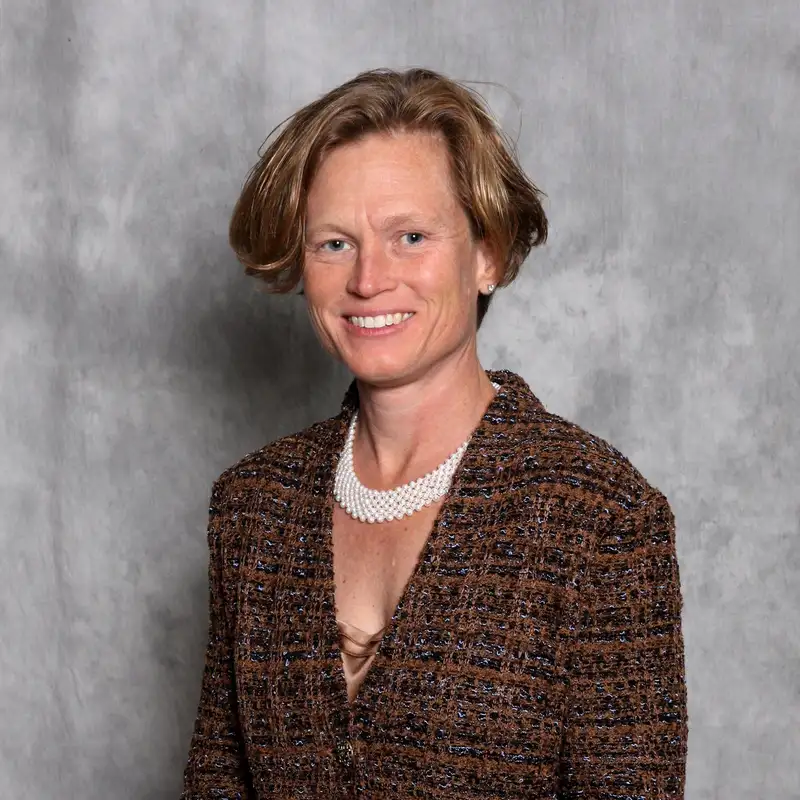
Oct 6 25 Patty Starr • Health Action Council
Hi everyone, this is Jim Haviland and we are still working through our Smart 50 honorees
for 2025.
this conversation about to share with you is from with Patty Starr from the Health Action
Council.
Now, one of the things we'll talk about in this conversation is that health is so much
more than health care and that really employers have an outsize
opportunity, I wouldn't say responsibility, but opportunity to impact the health of the
people that are spending so much of their lives in their stead.
So very interesting conversation, especially right now as we talk a lot about health and
healthcare.
Please enjoy my conversation with Patty Starr from the Health Action Council.
All right, welcome to Lay the Land weekly impact.
This is the 2025 Smart 50 edition and we are here talking about the smart Honorees and
trying to figure out what makes them smart.
So Patty, thanks for making some time for us today.
Thank you for having me.
So give me a little sense of the story arc.
How did you get to this moment in time?
Where did you start and what got you eventually to the Health Action Council?
Wow.
graduated with marketing and a minor in stats and management.
Worked in publishing, then worked for a health insurance carrier.
Owned my own business as a small business and individual broker consultant.
Then went over to COSE and helped run their small group healthcare program.
And then from there, I and many of my colleagues have been taking advantage of that.
And then moved up to
Health Action Council where now I'm helping large employers with their health care
benefits.
Well, that's fantastic.
how long have you been with the Health Action Council is your creation?
No, Health Action Council actually was created back in 1983 by a about five trailblazer
organizations in Northeast Ohio who really were trying to improve health care for their
employees.
And you know, when I was looking up reading about your organization, it's
You know, the notion of what we know about what makes for healthy employees has changed so
much over the years.
You know, we spend, you know, it isn't just about, are they paid well enough?
He's like, are they engaged?
Are we creating a psychologically safe space?
You know, so on and so forth.
I I spend a lot of time with my clients helping them figure that stuff out.
You're looking with the, you know, reading tea leaves of how people behave to see whether,
whether it's a, uh, they're doing a good job of that.
That's great.
Um, how much, um,
What has changed for you?
makes this so special?
You know, I'm really passionate about health, not health care by itself.
There's a difference between health care and health.
I'm really passionate about the health of an individual and them to be able to live their
fullest life that they want.
I've had someone tell me that it's not really health care.
We have health repair.
We call that health care.
It's creating a healthy environment and helping people.
really be healthy is a different thing.
Absolutely.
And employers have a very important role in that because employees spend a lot of time
working.
That's a good part of their day, at least four or five days a week.
So employers play that role in being able to provide benefits, which obviously help them
both financially and from an accessibility standpoint.
Also just making sure environments are safe.
Education's phenomenal when it comes from an employer sharing
What are some best practices?
Maybe even setting up some programs where they can engage because once you engage someone
for that 28 days, we know that they're more likely to make it a habit.
So really, the employer has a great breadth of impact on employees' health.
Well, and it's enlightened self-interest, right?
mean, that uh engaged employees, healthy employees are all better at being able to achieve
the aims of the organization.
Correct.
um So um what excites you about the work you're doing right now and what's changing about
that?
So it's constantly evolving.
We've been talking about this a lot recently that what's good one day not necessarily is
good the following day and or needs to already be advanced the following day.
One of the projects we're most excited about is our work that we've been doing around
social determinants of health within our population.
We recognize that once somebody gets sick to your point, they can go into the healthcare
system.
They get managed either through a navigator, through utilization management, case
management, because they're chronic, they're complex.
They get the support in most cases that they need.
However, how do we help control the overall cost?
Once we allow someone to get down to where they have a medical condition and they have
that complexity.
We have efficiencies and effectiveness and navigation that can help us control that
journey and help them and support them.
But how else can we control costs?
And the best way to control costs is actually to eliminate it, right?
So we started to look at employees and their dependents and saying, what else is driving
some of these costs in healthcare?
And we really found that about 80 % of it sits outside of the healthcare system and not
inside the healthcare system.
It's driven more by what we call today SDOH or social determinants of health issues, which
could be transportation.
It could be food insecurity, housing insecurity, isolation, education, literacy.
So large breadth of other things that can impact an individual's health.
And what we ended up doing is taking someone's clinical risk and then overlay their social
determinant risk on top of it and said,
how can we better support these individuals?
And we created a system that's accessible either through the customer service unit or
through the clinical unit.
And additional outreach is done to those individuals to get them the services that they
need to actually help eliminate some of the healthcare costs.
And coming 1-1-26 we expect that we're gonna be able to transition that system so it's
just not outreach to those employees, but also those employees will now be able to reach
into the system as well and say,
Hey, I need help.
Got it.
Yeah, it reminds me so much of when we work with leadership teams.
We're talking about we have a model for the hierarchy of needs, right?
And how, you know, when you're sitting here, you know, working with me on your strategy, I
want you not at the bottom rung or here.
I want you to get as far up as I can.
So I put food out and beverages out.
It's like, you know, same thing for everyone that's working for you if they're in the
physiological stage.
You're not going to be able to focus on work.
Correct.
Absolutely.
Well, great.
So tell me a little bit what leadership lessons you take.
So you're here because you're actually doing great work and
must have some leadership capabilities.
What do you look to as far as your
and things you've taken on over the years?
I would tell you one of the biggest things I've learned is listen.
Listen more than speak.
The people around you, no matter what level they are, they have something to bring to the
table and you can learn from them.
So you can compile then those learnings and really help even grow your teams more and
build more collaboration across them.
Cause you've listened to all of their voices and you brought them together for one reason,
to really grow together.
The, uh, the, in my portfolio, my years, the, the leaders that are
the most listening, the most realizing that they couldn't possibly know it.
There's nothing about leadership is organic.
You've got to learn that journey.
So,
have you had along this path, have you had some mentors that helped you do what you're
doing today?
One or two, and they've taught me some really good lessons and shared some of their
expertise.
One is always ask questions.
Be open to the answers to just don't ask questions but learn from the questions you're
actually asking which I think is really important and Then the second is it's not just
about the short term.
It's really about the long long term journey.
So you have to dance for today
and be agile and flexible for today, but you're really, should always be looking forward.
It's gotta fit into a larger framework.
And has to fit into something much larger.
We like to call that ad hoc-ery when you just focus on today.
We're like gonna solve the problem today, but how is it, you know, it's gonna keep coming
back if we don't take a long-term view of it.
And do you wanna name check anybody, anyone that you wanna give particular attention to?
Not at this time.
Okay, no problem.
So tell me about the team.
So how large is your organization?
Today we sit 15.
Strong and mighty.
right, very good.
know, quite often we talk about culture being an important part of keeping an organization
really running well.
And what kind of things do you do to keep the culture in line?
I'm very much committed to culture.
Sure.
We have a value statement, multiple value statements that we have.
We also have ways of being of just that as we onboard people, we share with them.
some of our expectations around how we treat each other, how we interact with each other,
how we just work on a day-to-day basis.
And then we also do team meetings.
I invest into our team at least twice a year and I bring everyone together.
And we really do sort of that brain dump for about three days and we learn from each
other.
Oh, interesting.
we build collaboration across the team so that as we leave the room, we know who our
partners are, what we're working on, how we're...
gonna work for the next X amount of months or years.
Right, that's brilliant.
uh we definitely suggest having a consistent cadence, consistent mechanism for all that
kind of stuff so it becomes part of the, what we call rituals, artifacts, and language of
the organization.
Absolutely.
the culture.
good.
Anyone you want to uh thank uh for being an honoree uh with Smart 50?
I would definitely like to thank our team at Health Action Council.
They're wonderful to work with.
They've really been supportive.
They are Health Action Council.
Also our member leadership and then just friends and family for their ongoing support.
Thanks so much.
Appreciate it.
Creators and Guests